浮萍可做食物?
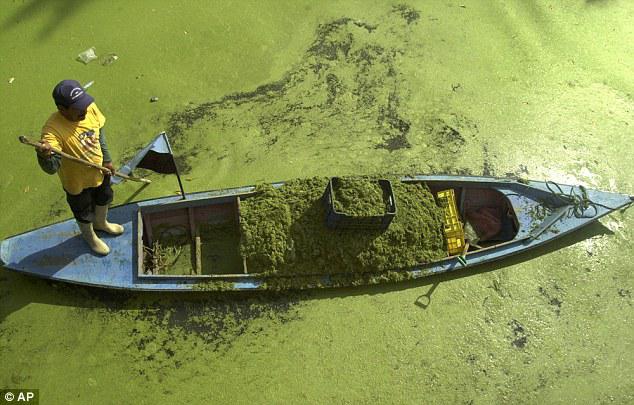
A common weed that pollutes Britain's lakes and ponds could be the answer to the world's lack of food, according to scientists. Duckweed – the little green dots that rapidly cover water - may not look appetising but they are very high in protein in their raw state containing 45 per cent compared to 36 per cent for soy beans.
In France and Spain, experts at a food technology conference in Chicago have showed a method of drying the duckweed and making it into a high-protein powder. The super-food, which is green, is known as Lentein and contains 68 per cent protein as well as fibre. It could eventually replace food products like powder made from milk and soya. It is not genetically modified in any way.
Science fiction writers have told spacecraft of the future could carry huge water tanks to grow such micro-plants to produce oxygen and foods. Food company Parabel is now working on a white kind of Lentein. With the world needing an estimated 70 per cent more food in the next 30 years to support its growing population, the makers claim that their plant could help meet demand.
The company said the plant is harvested from open-air water tanks that do not need farming land. It can be grown almost anywhere where there is a water supply. The plant doubles in size every 16-32 hours – and can be harvested daily. As most of the water is recycled – and the growing plants help prevent evaporation – it is said to use less water than comparable crops as well.
The company has been developing a method of turning it into a convenient and useable foodstuff. This week the plant won an Innovation Award at the Institute of Food Technologies conference in Chicago. It's a very common plant that grows all over the world, but grows best at the equator. The company is building a plant in Uganda which should be producing 2,000 tons of lentein in the first year.
本时文内容由奇速英语国际教育研究院原创编写,禁止复制和任何商业用途,版权所有,侵权必究!