生物学家发现降解塑料的新方法:让毛毛虫吃了它!
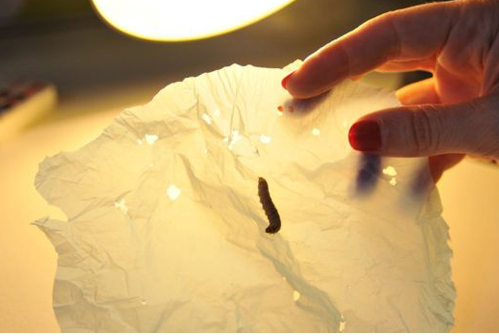
A caterpillar(毛毛虫) that eats on plastic bags could hold the key to solving plastic pollution, scientists say. Researchers at Cambridge University have discovered that the caterpillar which eats beeswax(蜂蜡), can also degrade(降解) plastic.
Experiments show the insect can break down the chemical bonds(化学键) of plastic in a similar way to digesting beeswax. Each year, about 80 million tons of the plastic are produced around the world. The plastic is used to make shopping bags, food packaging, one-off raincoat and other things, but it can take hundreds of years to degrade completely.
However, caterpillars can make holes in a plastic bag in less than an hour. “The caterpillar will be the starting point. We need to understand the details under which this process operates. We hope to provide the technical solution to cutting down the problem of plastic waste,” the scientist said. And the scientists who discovered it want to speed up the process of discovering the chemical secrets behind the natural degradation(降解) of plastic. They think something in the caterpillar—as well as the insect itself—might play a role in breaking down plastic.
If the chemical process can be found out, it could lead to a solution to managing plastic waste in the environment. “We are planning to use this finding in a practical way to get rid of plastic waste, working towards a solution to saving our oceans and rivers,” said the scientist. “However, we should not feel good to dump plastic on purpose in our environment just because we now know how to degrade it.”