威尼斯遭遇50年最大洪水 圣马可大教堂被淹
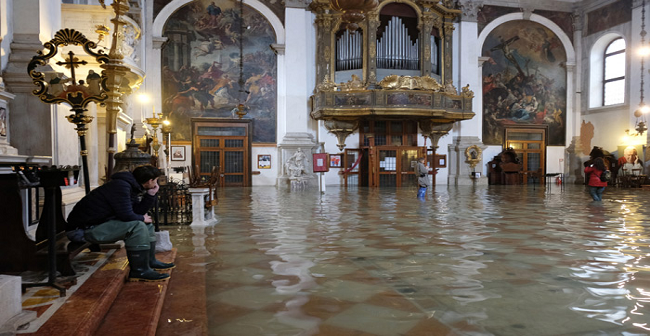
Severe flooding in Venice that has left much of the Italian city under water is a direct result of climate change, the mayor says. The highest water levels in the region in more than 50 years would leave a permanent mark, Venice Mayor Luigi Brugnaro tweeted. "Now the government must listen," he added. "These are the effects of climate change. The cost will be high."
The waters in Venice peaked at 1.87m, according to the tide monitoring centre. Only once since official records began in 1923 has the tide been higher, reaching 1.94m in 1966. St Mark's Square — one of the lowest parts of the city — was one of the worst hit areas. St Mark's Basilica was flooded for the sixth time in 1,200 years, according to church records. Pierpaolo Campostrini, a member of St Mark's council, said four of those floods had now occurred within the past 20 years.
The mayor said the famous landmark had suffered grave damage. The crypt was completely flooded and there are fears of structural damage to the basilica's columns. The city of Venice is made up of more than 100 islands inside a lagoon off the north-east coast of Italy. Two people died on the island of Pellestrina, a thin strip of land that separates the lagoon from the Adriatic Sea. One of them was electrocuted as he tried to start a pump in his home.
Mr Brugnaro said the damage was huge and that he would declare a state of disaster, warning that a project to help prevent the Venetian lagoon suffering devastating floods must be finished soon. "The situation is dramatic. We ask the government to help us," he said on Twitter, adding that schools would remain closed until the water level subsides. He also urged local businesses to share photos and video footage of the devastation, which he said would be useful when requesting financial help from the government.
本时文由奇速英语国际教育研究院提供,未经书面授权,禁止复制和任何商业用途, 版权所有,侵权必究!(作者投稿及时文阅读定制请联系微信:18980471698)