“鼻”不可挡:解析犬类独特的世界感知力
Dogs experience the world in a way that’s very different from humans. While we use our eyes to see, dogs rely on their amazing sense of smell. Scientists have long wanted to know: How do dogs understand the scents around them? A new study gives us some answers.
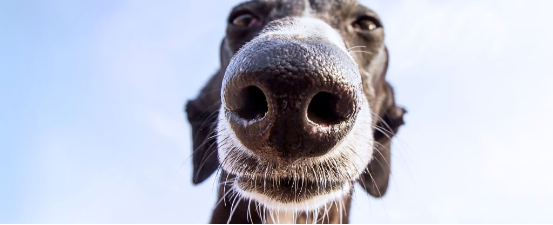
Dogs’ noses are super powerful. An average dog has 125-300 million smell sensors (嗅觉受体) in its nose. Humans only have about 6 million. That makes a dog’s sense of smell 1,000- 10,000 times better than ours! For example, police dogs can find even the tiniest drop of gasoline. Their noses help them “see” things we can’t.
For 40,000 years, dogs have worked with humans. They help find food, catch criminals, save endangered animals, and even discover diseases. But until now, studying their brains was hard. Old methods used expensive machines and made dogs sit still, which wasn’t good for active dogs.
Now, scientists have a new way. They used a camera, a computer, and a green laser (激光) to study four calm dogs. The laser passed through their fur and skull (头骨), and the camera recorded brain activity when the dogs smelled things like alcohol, mint, garlic, and a special plant. AI analyzed the patterns to see how their brains reacted.
The study found that a part of the brain called the amygdala helps dogs link smells to feelings. This means scents can make dogs happy or sad. For example, many dogs don’t like the vet’s office because they remember bad experiences there.
This research could help train dogs better. It might even lead to tools that tell us what dogs are smelling. Imagine a collar that translates their nose messages! By learning more about dogs’ world, we can be better friends to these loyal animals.
原创编写 版权所有 侵权必究! 每日更新 个性化阅读 英语飙升!