河南发现长江流域最早青铜器
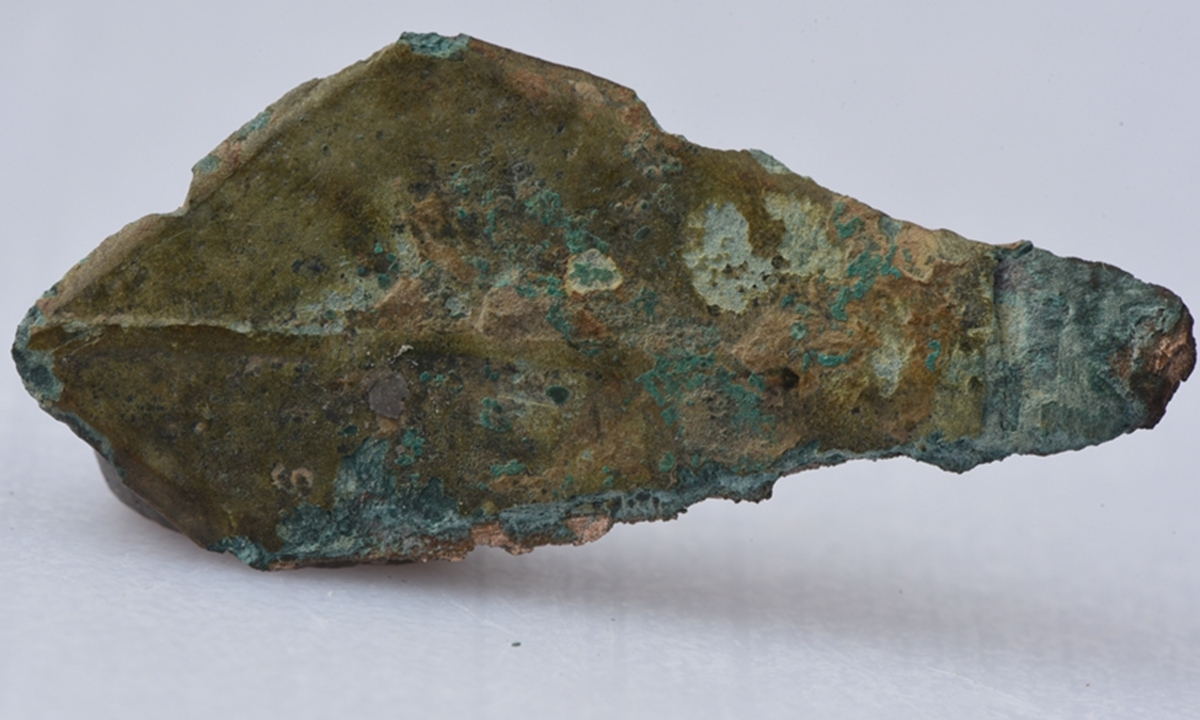
A recent archaeological discovery in China is challenging our understanding of ancient technology. Two small bronze artifacts found at the Gouwan site in Henan Province have been scientifically dated to be about 4,500 years old. This makes them the earliest known bronze objects ever discovered in the Yangtze River Basin.
The two artifacts were unearthed from layers of soil dating back to the late Qujialing culture. One is a 3.66-centimeter-long, arrowhead-shaped piece that closely resembles stone arrowheads from the same period. The other is a 6.45-centimeter-long, thin rod-shaped fragment. Examination revealed visible casting marks on both items, indicating they were man-made through an early metalworking process.
This finding is particularly significant because it challenges a long-held belief. Previously, most early bronze artifacts in China were found in the northwestern and northern regions. This led experts to assume that bronze technology in the Yangtze River Basin developed much later than in the Yellow River region. “These two bronze artifacts provide new materials for studying the origins of metallurgical (冶金的) technology,” said lead researcher Zhang Jian from Zhengzhou University. The discovery suggests that metallurgical experimentation in the middle Yangtze River area may have developed in parallel with the north, rather than simply being influenced by it.