西尔万・戈德曼:用四个轮子,解锁购物新可能
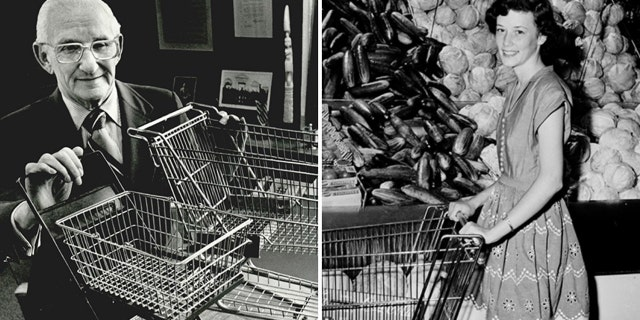
① Sylvan Goldman, a businessman and Oklahoma native, was working for a California grocery wholesaler after World War I when he became fascinated by the new “supermarkets” that put everything under one roof. Still, he noticed a problem: Shoppers were buying only what they could carry in bags and baskets. In 1920, he and his brother, Alfred, brought the supermarket concept back to Oklahoma, where they established their own chain of stores. But Goldman still fretted over the persistent problem of shoppers being limited by their arms.
② Goldman’s first prototype for a shopping cart, in 1936, was wonderfully crude. It consisted of two folding chairs placed seat-to-seat with wheels attached to the bottom and a basket on top. He introduced the first official shopping cart on June 4, 1937, at the Humpty Dumpty grocery store in Oklahoma City.
③ Yet Goldman’s heart sank when he saw that customers wanted nothing to do with the new contraptions. Women who had grown weary of baby strollers refused to push anything around a store again. Men considered the carts emasculating and said wheeling them around was “women’s work,” according to Alyson Atchison, director of galleries and collections at the Science Museum Oklahoma. The museum now houses the first cart Goldman put into public use—which spent its earliest days sitting unloved and unused at the front of his store.
④ Goldman’s solution was elegant, and very simple: He hired attractive models to shop in the store while confidently pushing the carts, showing other shoppers firsthand how convenient and fashionable they could be. Shoppers saw the appeal and began emulating these comely men and women. Other grocers soon clamored for the carts, but many had to be patient: By 1940, store owners looking to buy new shopping carts reportedly faced a seven-year wait list. That same year, Goldman began producing the more familiar nesting cart (following a patent war over the design), which solved the messy problem of what to do with all those carts between customers.
⑤ Food producers began offering larger container sizes in stores, knowing customers could now transport bulky items with ease. Goldman’s humble invention helped create the foundation for today’s retail landscape of vast stores filled with oversize products. As Atchison says, those wheels “changed and innovated shopping forever.”
⑥ And they show no signs of slowing their roll. Today, 20 million to 25 million shopping carts are cruising through America’s retail stores at any given moment, roughly one cart for every 13 Americans.