灯塔水母的 “生命重启” 密码
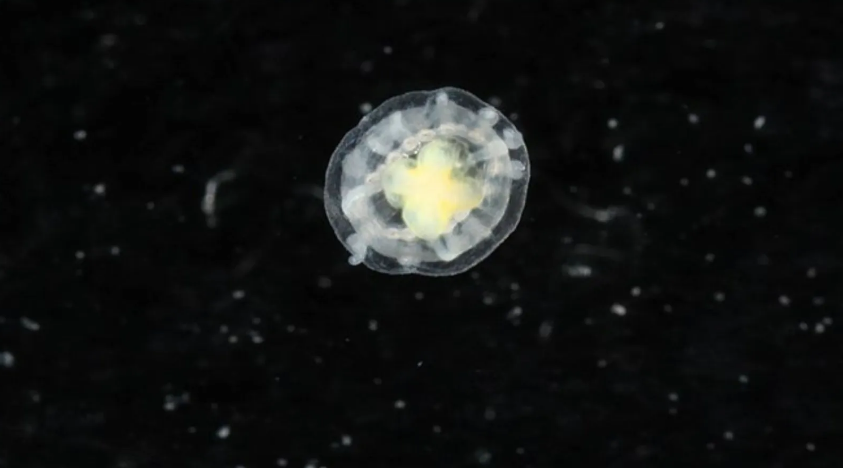
One ocean-dwelling creature found in tropical waters is known to be able to reverse its own life cycle, cheating death. The jellyfish, Turritopsis dohrnii, was first discovered in 1883, but it was around 100 years later that scientists uncovered the creature’s ability to rejuvenate its own life cycle and combat environmental and physical stresses.
The T. dohrnii’s ability to rejuvenate could “hold important clues to maintaining a long life and lengthening the healthspan of humankind,” Michael Layden, a professor of biological sciences at Lehigh University, said. He added that the jellyfish were also “very inexpensive to work with in a lab, and thus have the potential to be a huge return on investment for biomedical research. It likely opens up novel strategies to develop therapies to treat damaged tissues and organs.”
T. dohrnii is around 4.5 millimeters wide and tall, making it smaller than the nail of your little finger, and when it experiences environmental or physical stresses, which could include starvation, instead of dying, it rejuvenates itself.
Essentially, its cells can “transform into new cell types turning the unhealthy or stressed adult medusa into a ball of tissue from which a polyp can grow,” professor Christine Schnitzler said. A medusa is the term used to describe an adult jellyfish and a polyp is the name for the organism at its early stage of life. This process — the medusa turning into a new polyp, which is referred to as transdifferentiation — also reportedly takes only 24 to 36 hours.
In order to carry out this process, when T. dohrnii is “physically damaged, starving, or stressed by temperature changes,” it sinks to the ocean floor to begin the transformation, “effectively bypassing death,” Maria Pia Miglietta, a professor of marine biology at Texas A&M University, said.