中国L3级自动驾驶,正式开测!
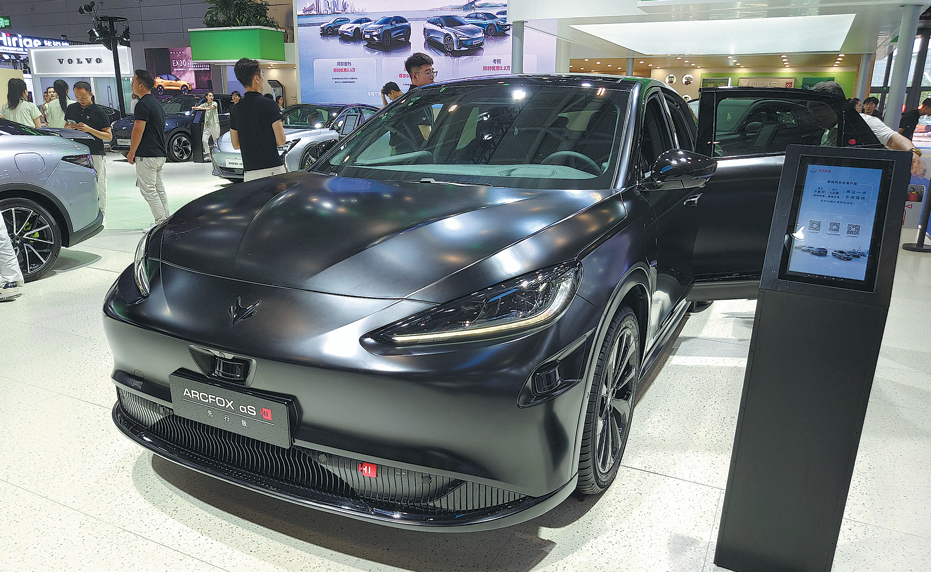
China has officially started testing Level 3 (L3) self-driving cars on public roads. In early December, models like the Deepal SL03 and Arcfox Alpha S received national approval for a conditional commercial pilot program. These vehicles, registered with standard license plates, are now allowed to operate under defined conditions on specific highway sections in Chongqing and Beijing.
Level 3 autonomous driving, classified as “conditional automation”, means the vehicle can handle all driving tasks in certain situations, like on highways. However, the human driver must still be ready to take control when the system requests it. This marks a key advance from Level 2 (L2) systems. In an L2 car, the driver must constantly supervise and is always legally responsible for the vehicle, even when using driving-assist features.
Several major Chinese automakers, including BYD, Nio, FAW, and SAIC, are in the process of getting L3 approvals. Huawei’s Advanced Driving System (ADS) for highway L3 is undergoing extensive testing in several Chinese cities. The brand Avatr is set to become the first to use this system in mass-produced cars, with new models planned for launch in the second half of 2026. Market research also indicates significant demand, with many consumers willing to pay more for advanced self-driving features.
Despite progress, significant challenges remain before L3 cars can become widespread. A major unresolved issue is legal liability: determining who is responsible — the driver or the manufacturer — when the car is in autonomous driving mode. Car companies are also exploring different technical paths, balancing cost, safety, and performance, which will influence future standards. Furthermore, nationwide use depends on better infrastructure, like high-precision maps.