钱塘江畔将添艺术新地标,世界级设计抢先看!
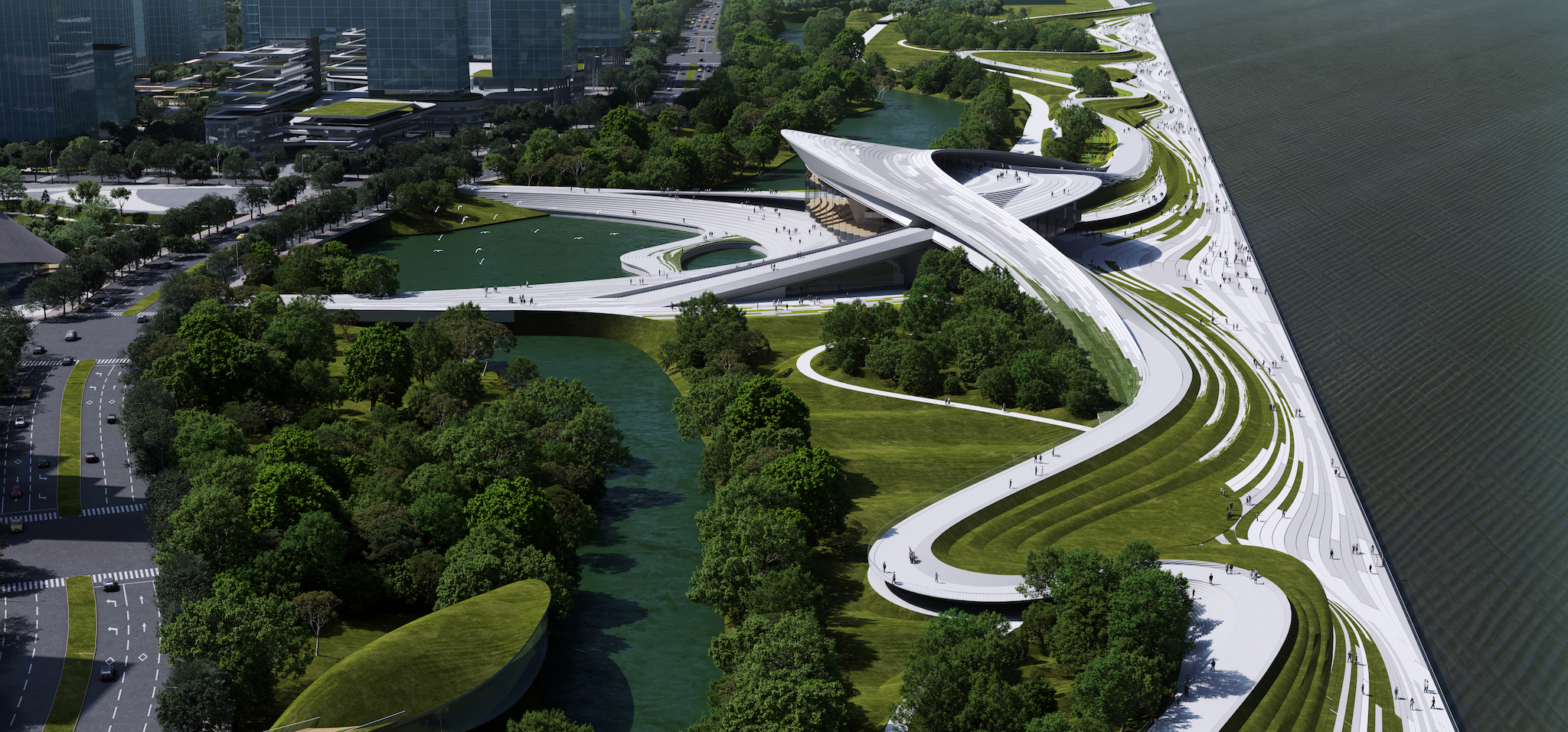
A series of ambitious downtown developments are nestled beside the Qiantang River in Hangzhou. These new buildings wind along the river, offering wonderful views of the nearby waterways. In the coming years, another building will be added to this growing skyline (the top outline of a city’s buildings): the Hangzhou Qiantang Bay Art Museum. Leading the museum’s design is Snøhetta, a world-famous architecture firm from Oslo, Norway. It has designed many famous projects, such as the Oslo Opera House (one of Europe’s most famous opera houses), Egypt’s Bibliotheca Alexandrina (a historic famous library in Egypt), and the 2017 transformation of Times Square.
According to the design drawings recently released by Snøhetta, the Qiantang Bay Art Museum will be greatly influenced by its natural environment. The museum’s architecture draws most of its inspiration from the Qiantang River, reinterpreting the river’s winding course through a regular outline, smooth curves and natural shapes. At the center of the design are two wave-like structures, twisted into walkways that meet at a central point. Directly above this point is a green rooftop platform, where visitors can enjoy the view of the river in front of them.
Covering an area of 18,000 square meters (about 194,000 square feet), the museum is divided into two well-organized parts. They are connected by smooth walkways that run through the surrounding area. To the north, pleasant paths curve along the river view and finally lead to the rooftop. To the east, bridge-like paths easily guide visitors from the city area to the cultural part. In addition, a central entrance on the museum’s ground floor further emphasizes this idea of entry. In other words, this gate is both a physical and symbolic entrance. Walking under it makes people feel like entering a world of nature, creativity and beauty.
As a whole, Snøhetta’s design for the Qiantang Bay Art Museum shows an artistic vision. It exists in harmony with the Qiantang River rather than competing with it. This idea continues inside the museum, which has large public spaces for social activities, education and group gatherings. “Our design catches the core of the site’s special location. We use architecture and landscape as a bridge to connect nature and the city smoothly,” Snøhetta explains. “With this museum, we hope to inspire people’s interest in art and creativity, honoring Hangzhou’s famous Qiantang River.”