千年古榄:时光镌刻的自然传奇
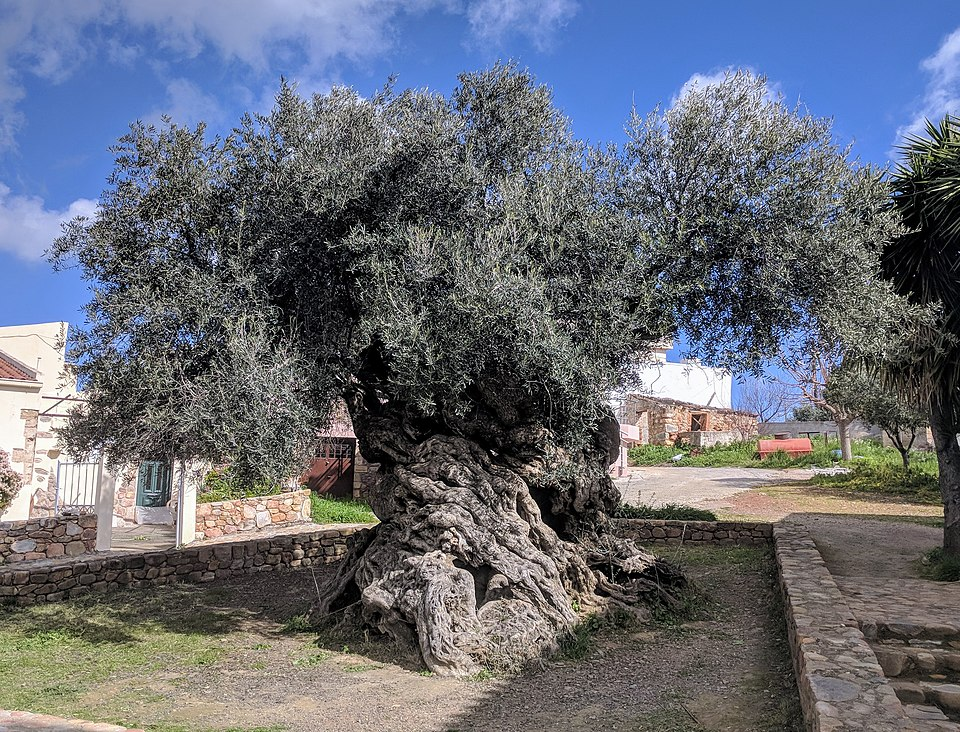
The ancient olive tree of Vouves, located on the island of Crete in Greece, is a remarkable natural wonder. It belongs to a local variety called tsounati and was grafted onto a wild olive tree trunk about three meters above the ground. What makes it truly stunning is its enormous trunk, measuring 12.5 meters around and 4.6 meters across. Rather than looking like a normal tree trunk, it appears as a complex, twisting sculpture — one that continues to change shape even today.
Determining the exact age of the Vouves olive tree is not possible. Over the centuries, the heartwood at its center has slowly decayed away. Yet this is part of the tree’s natural cycle of renewal. As the inside rots (腐烂), new wood grows outward, causing the trunk’s form and size to keep evolving (进化) over thousands of years. Scientists have used tree ring analysis to confirm it is at least 2,000 years old, while researchers from the University of Crete believe it could be as old as 4,000 years. Although no method can verify its precise age, it is widely considered the oldest olive tree in the world.
This ancient tree has lived through much of recorded history. It existed long before famous Greek landmarks like the Parthenon, and even before the time of well-known historical figures such as Alexander the Great. Its pale, weathered trunk tells a story of survival — enduring droughts, fires, and human activity while still producing olives. Today, the tree is recognized as a protected natural monument and draws about 20,000 visitors each year to western Crete.