橡胶为何如此强韧?科学家终于解开百年谜团
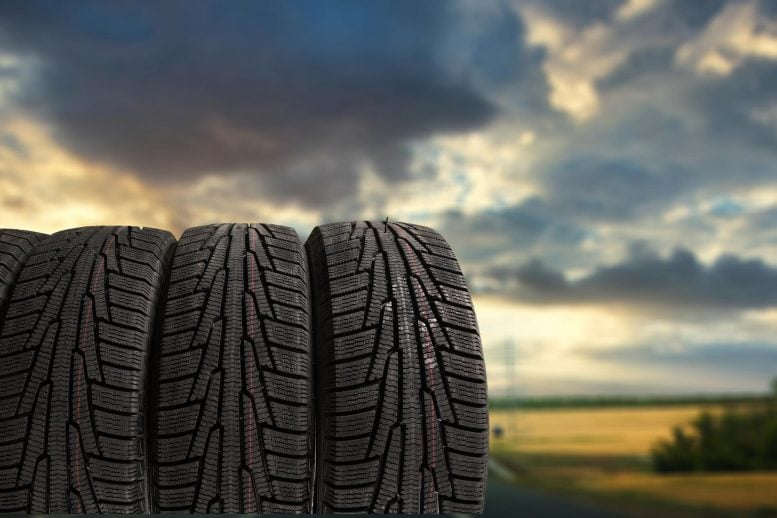
Every time you drive, fly on a plane, or water your lawn, you depend on reinforced rubber. It is used in car and aircraft tires, seals, and countless everyday items. For nearly a century, scientists have known that adding tiny particles called carbon black makes soft rubber much stronger and more durable. This is why tires are black and can withstand years of heat and stress. Yet exactly how this strengthening works remained a mystery.
Now, a team led by engineering professor David Simmons has solved this mystery. Using nearly 1,500 molecular (分子的) dynamics computer simulations, they discovered a key mechanism: a property called Poisson’s ratio mismatch causes rubber to resist changes in its volume when stretched. “We’ve been using this for almost a hundred years without really knowing how it works,” Simmons said. Tire companies have had to rely on trial and error to select the right carbon black.
When a normal rubber band is stretched, it becomes thinner while its volume stays almost the same. But when carbon black particles are added, they act like tiny supports, limiting how much the rubber can thin. As a result, the rubber is forced to expand in volume, which it naturally resists. The material “fights against itself,” leading to a huge increase in strength. The new findings unite earlier theories. The team showed that particle networks, sticky effects, and simple space-filling all contribute to resisting volume change—they are different aspects of a single process.