会听不会说?解开屏幕一代的“失语”困局(七选五)
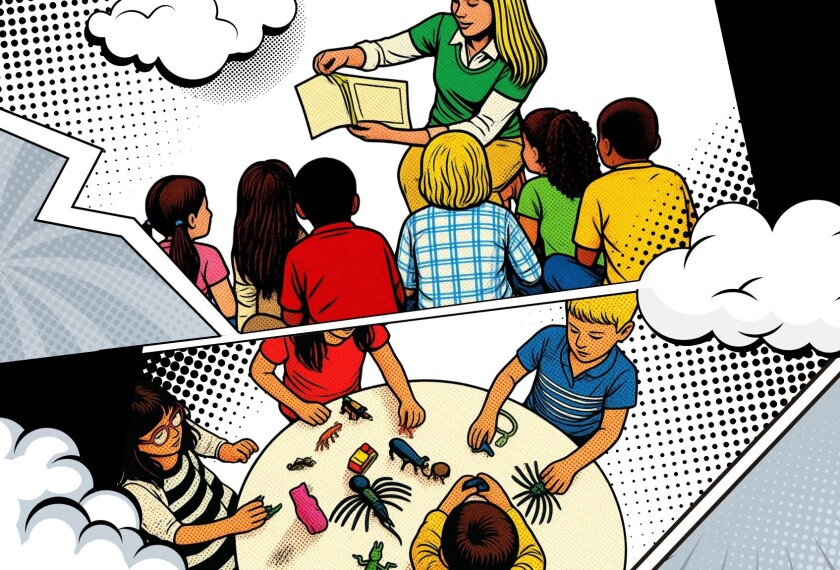
Creating space for students to practice talking is essential for early learners. “Hearing language is one thing, but actually using it, and having fun with it, is another,” says MaryKate DeSantis, a reading expert. ____1____ Compared to the past, more children today arrive at school with experience “communicating” via screens, which can slow down language development and make them uncomfortable starting conversations.
Reading books aloud is a powerful solution. ____2____ Books also offer an easy entry point for teachers to start discussions about characters, plots, and settings. As Ellen Frede, an early learning advisor, puts it, “It just makes perfect sense to have conversations about books you’re reading.”
Casual conversations also hold great value. Asking about a student’s life or interests may feel natural to the child. ____3____ “You’re really thinking ahead about the child’s thinking skills and language use,” Frede explains, “and you try to introduce new and rare words.”
Teachers also need to rethink typical classroom exchanges. Many teacher-student talks follow a short “three-turn” pattern: teacher asks, student responds, teacher gives a brief reply, and moves on. ____4____ This strategy, called “serve and return,” creates deeper conversational engagement and more language practice.
Imaginative play is another missed opportunity. When children play in groups, they plan, create, work things out, and solve problems—all requiring oral language. ____5____ Without daily play time, one kindergarten teacher notes, students miss out on valuable speaking practice.
Finally, fitting science into reading and writing lessons provides rich content for meaningful dialogue. “Science Talk” involves open-ended questions and child-friendly descriptions that strongly support language development.
A. But done well, it requires thoughtful planning, adds Frede.
B. Children who talk more in class tend to score higher on reading tests.
C. Listening to stories helps students learn new words and absorb language structures.
D. However, things are not so simple.
E. This kind of exchange is often brief and teacher-led.
F. Experts suggest extending this exchange by at least two more turns.