中轴线天坛耸峙,琉璃顶祈年殿恢弘
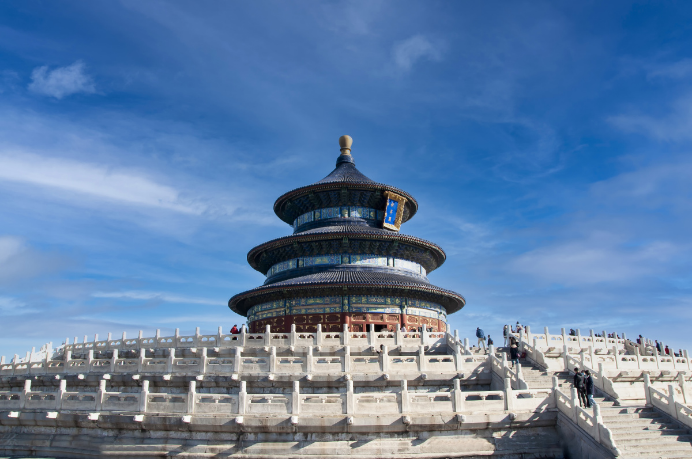
The Temple of Heaven, or Tiantan, is a famous symbol of Beijing. Its image appears everywhere — on metro cards, bank signs, hotels, etc. First built in 1420 when Emperor Yongle moved the capital to Beijing, this grand ceremonial complex (祭祀建筑群) has stood for over 600 years. After many careful repairs, it now stands beautifully along Beijing’s Central Axis, reflecting the ideal order of the ancient Chinese capital.
The most important building is the Hall of Prayer for Good Harvests, also called Qiniandian. It is the main part of the Altar of Prayer for Grain. This round building has a three-layer blue-tiled roof with a golden top. It is not only a place for ceremonies but also a display of ancient Chinese thought. Inside, the beautiful ceiling features a dragon and a phoenix, lucky symbols flying at the top. The hall is famous for its 28 huge wooden pillars (柱子) arranged in three circles. The inner four pillars stand for the four seasons. The middle twelve represent the twelve months. The outer twelve symbolize the twelve traditional Chinese hours. Together, the twenty-four pillars of the middle and outer circles represent the twenty-four solar terms, which mark seasonal changes. All twenty-eight pillars match the twenty-eight star groups of ancient Chinese astronomy (天文学). Through these symbolic numbers, the hall reflects how the ancient Chinese understood the harmony between heaven, earth and people.
During the Ming and Qing dynasties, emperors held spring ceremonies here, praying for good harvests and peace. Today, under the quiet evening sky, the hall still stands in solemn beauty, with carvings and painted beams quietly keeping centuries-old hopes.
原创编写 版权所有 侵权必究 每日更新 个性化阅读 英语飙升