废壳变新材料!花生壳竟能制备高端石墨烯
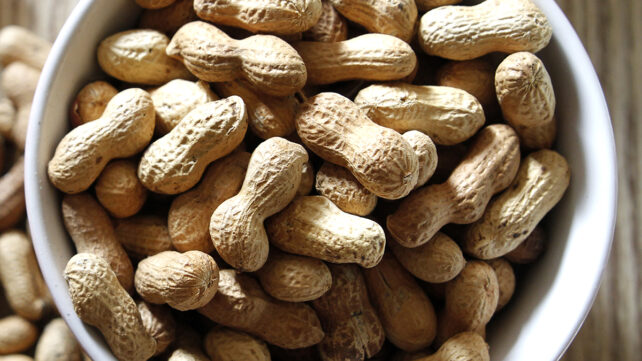
Every year, worldwide peanut production creates more than 10 million tons of waste shells. Most of these shells are either thrown away or turned into low-value products. Now, scientists have discovered a way to transform this unwanted material into a carbon substance much like graphene (石墨烯).
Graphene is a “wonder” material made entirely of carbon. It is super strong, extremely light, and conducts heat and electricity very well. Already used in many products, it holds great promise for improving electronics. However, making high-quality graphene on a large scale is challenging and expensive. A team from the University of New South Wales (UNSW) in Australia has found that humble peanut shells can be used to produce graphene in a cheaper and greener way. Their method requires much less energy and uses no chemicals, giving it an environmental advantage over traditional methods.
The key lies in lignin (木质素), a natural substance in peanut shells that is rich in carbon. The researchers first heated the shells indirectly at around 500°C for five minutes and then applied a short, higher-temperature treatment. This step removed impurities and turned the shells into char — a material packed with carbon that conducts electricity better than the raw shells. Next, they used a technique called flash Joule heating (FJH). This passes a powerful electric flash through the char, instantly heating it to over 3,000°C. The intense heat rearranges the carbon atoms into few-layer graphene. According to the team, this careful preparation is vital to produce graphene with few defects, ensuring it has excellent electrical and heat conductivity.
Although peanut shell-to-graphene methods have been explored before, this study highlights that carefully controlling the starting material significantly improves the graphene quality. The resulting graphene usually consists of a few layers stacked in a less ordered way. The researchers say it could take three to four years to scale up the technique for commercial use. They will continue to refine the process and test it with other organic wastes, such as coffee grounds and banana peels. According to Guan Yeoh, the lead researcher, their work shows a good balance between energy efficiency, graphene quality, and cost.
原创编写 版权所有 侵权必究 每日更新 个性化阅读 英语飙升