川美学生两天帮菜农卖掉170斤李子
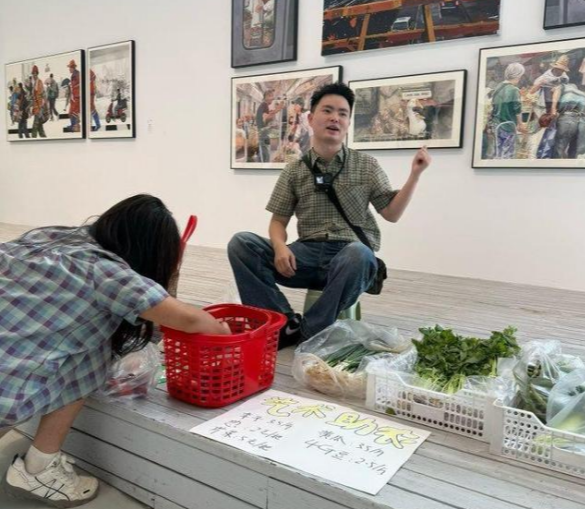
In late May at an art show in Chongqing, visitors noticed something unusual. Instead of the smell of paint, they breathed in the fresh smell of vegetables and fruit. In the center of the hall sat Wan Qing, an art student. Next to his paintings were baskets of cucumbers, beans, and plums (李子).
Within two days, 85 kilograms of plums were sold out. Was this a market? No. It was Wan Qing’s graduation project. For months, he had followed local farmers who carried heavy baskets into the city to sell their goods. He painted their tired but determined faces. In the end, he chose a simple way to share his art: letting people take home real fruit, so they could feel the connection between art and everyday life.
Wan Qing is not alone. Across China’s art schools, many young creators are making a similar turn. In the past, many young artists tried hard to copy Western masters. Now, young Chinese artists are no longer looking only to the West for inspiration. They are looking inward to their own culture and real people’s lives. Some use modern tools like digital technology to bring new life to traditional Chinese landscapes and ancient cave murals (壁画). They are not copying foreign styles. Instead, they confidently express Chinese beauty and spirit.
These young creators are putting down roots in Chinese soil. As the 85 kilos of plums showed, when art touches real life — a farmer’s hard work, the taste of fresh fruit—it becomes strong, fresh, and meaningful. That is where the next chapter of Chinese art is taking root.
原创编写 版权所有 侵权必究 每日更新 个性化阅读 英语飙升