口袋公园:“绣”出城市方寸之美
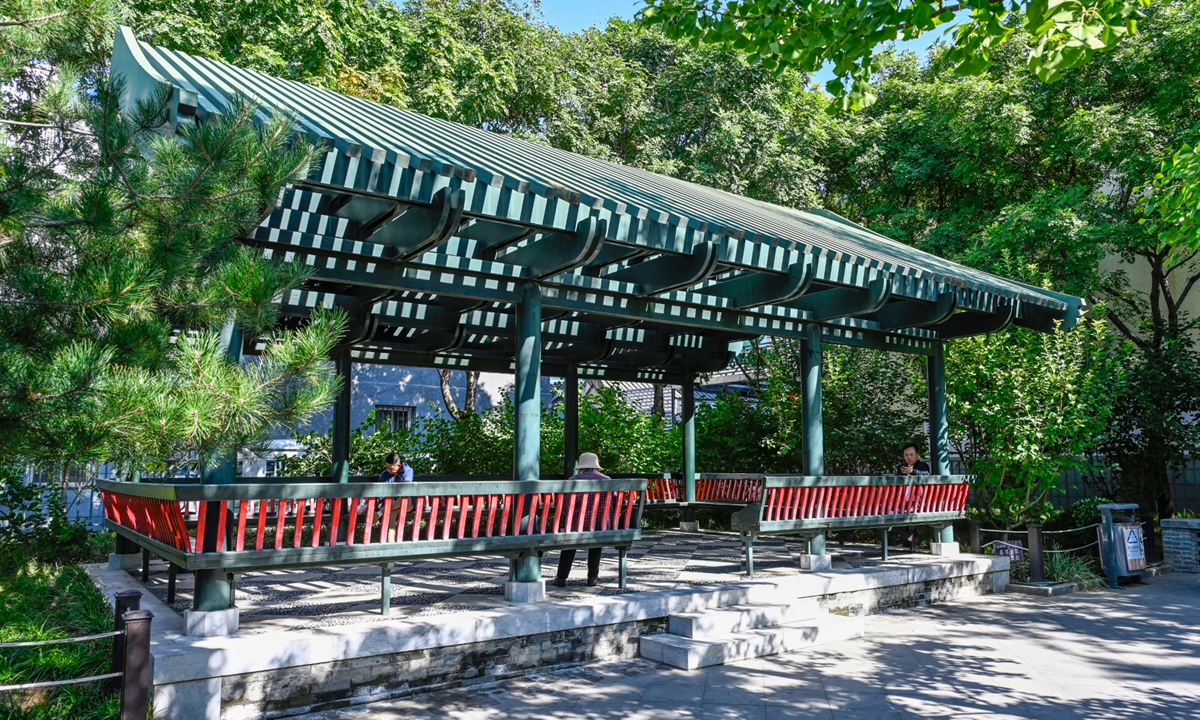
Near Beijing’s busy Shichahai scenic area, a peaceful pocket park stands where messy illegal structures once occupied the site. Nowadays, local elderly residents often gather here to play Chinese chess, surrounded by blooming Chinese roses that soften the noise of the bustling city. This lovely mini park is not unique. It is one of thousands of pocket parks that are transforming China’s urban landscapes and ordinary people’s daily lives across the country.
Also called mini parks, pocket parks are usually small, often smaller than a standard football field. Built on idle urban land, vacant roadside spaces or sites once occupied by illegal buildings, they are fitted with basic facilities like shaded walkways and leisure benches. These tiny green oases (绿洲) scattered in residential communities serve diverse groups. Seniors practice tai chi for relaxation, little kids play freely, and busy office workers can take a short break to refresh themselves on workdays.
Official data shows the rapid development of such urban upgrades. Over China’s 14th Five-Year Plan period, more than 18,000 pocket parks were built nationwide. Urban experts point out that this trend marks a key shift in China’s urban renewal. The city renovation (翻新) model has changed from large-scale, top-down projects to a people-centered and refined renewal. Instead of pulling down old neighborhoods for huge constructions, cities now focus on making full use of abandoned land at low cost to improve urban livability.