二月二:龙抬头!万物复苏有盼头
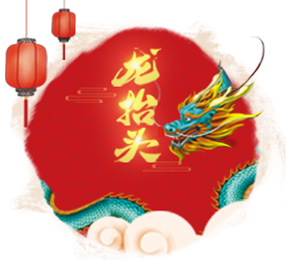
A well-known Chinese phrase goes, “Er yue er, long tai tou,” meaning, “On the second day of the second month, the dragon lifts his head.” The traditional Chinese Longtaitou Festival, or Dragon-Head-Raising Festival, falls on the second day of the second lunar month every year, and marks the start of spring and farming.
Ancient people believed that after this day, rainfall increases because the rain-bringing Dragon King awakens from his winter sleep. The festival celebrates ancient Chinese agrarian (农业的) culture. While some traditional ways to celebrate it are no longer practiced, others continue to exist.
The most famous tradition is getting a haircut. Some believe that going to the barber on this day gets rid of bad luck, while others believe getting a haircut during the first month of the lunar calendar brings bad luck. According to another saying, cutting your hair in the first month will bring bac luck to your uncle. Although today few pay attention to it, it was once a tradition to line up outside barber shops on the day of Longtaitou, because people hadn’t got haircuts for some time.
People eat tofu balls in East China’s Fujian province during the festival, and often make tofu and vegetable balls to pray for family and business. Fried(油炸的) beans are the traditional festival food for people in parts of Shandong province. Eating chengyao cakes, which are made with sticky rice, during the festival is tradition in Suzhou, East China’s Jiangsu province. Meanwhile other foods, like dumplings, spring rolls and popcorn, are named after dragon body parts to mark the day. Noodles are dragon’s beard (long xu), dumplings are dragon’s ears (long er), spring rolls are dragon’s scales (long lin), and popcorn is dragon’s seeds (long zi).